MOKET
The biker wave: meaning, gestures and unwritten rules
Two motorcycles pass, a hand leaves the bars, and for a moment two strangers recognise each other. The biker wave is one of the nicest traditions on the road. Here is where it comes from, how it works and when to skip it.
Why do motorcyclists wave?
Riders share the same road, the same cold, the same rain and the same risks. The wave says “I see you, we are on the same side.” Brand, engine size and style do not matter: sport bike, cruiser or naked, everyone gets a wave.
Where does the biker wave come from?
Nobody knows for sure who waved first. The best-known story tells of two motorcycle pioneers who supposedly waved at each other when they met on the road in the early 1900s: a legend, not a documented fact. What is certain is that when motorcycles were rare and breakdowns common, a wave between riders also meant “if you need help, I am here”.
The most common gestures
- Left hand open, held low towards the tarmac: the classic wave.
- Two fingers in a V pointing down: the most quoted meaning is “keep two wheels on the ground”, in other words ride safe.
- A nod of the head: when the left hand is busy with the clutch or the road needs full attention.
- A foot out: a thank-you or greeting when overtaking or being overtaken and the hand has to stay on the bars.
Why the left hand?
The right hand works the throttle and the front brake, so it stays on the bars. In most of Europe and the US traffic keeps right, so the left hand is also on the side of oncoming riders. In the UK and other countries that drive on the left, many riders nod instead.
When it is better not to wave
- In a corner, while braking or while changing gear.
- In city traffic, where there are many bikes and your attention is needed elsewhere.
- On bad surfaces, in strong wind or in the wet.
- In all of these cases a nod is enough, or nothing at all: no real rider is offended by a missed wave.
Differences between countries
In Italy and Germany the left hand is the most common greeting; Germans call it the Bikergruß. In the UK a nod is more common. In the US the low wave with fingers pointing at the road is well known. In popular riding areas in summer there are so many bikes that riders wave less often.
After the wave: Moket
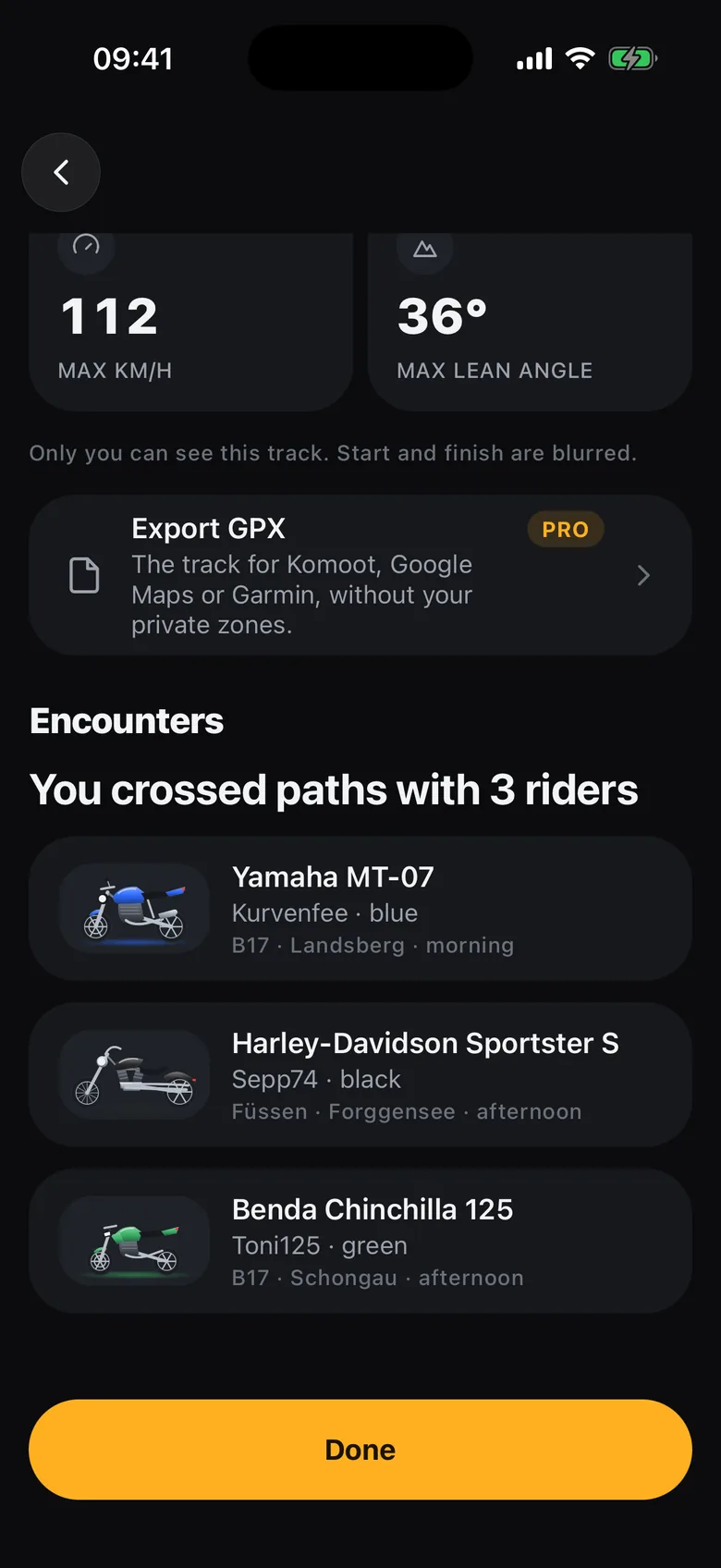
Often the rider you waved at is gone a second later. With Moket you see the motorcycles you crossed paths with after your ride: model, colour, rough area and time of day. If you like, send a light contact request. A chat opens only if the other rider accepts, and nobody ever sees your live location.